Ove builds an accessible ramp at Sonja’s school
A Man Called OveOve’s construction of an accessible ramp at Sonja’s school turns a prolonged struggle against official inaction into direct, practical help. The ramp is more than a repair: it answers the barriers Sonja encounters after the bus accident, and marks the point at which Ove stops trying to make distant authorities acknowledge their responsibility and does what he can with his own hands.
Background: rebuilding around Sonja’s life
After the accident, Ove rebuilds the couple’s home to accommodate Sonja’s mobility. He replaces the kitchen counter with a lower one, finds a specially made stove, reconstructs the doorframes, and puts ramps over the thresholds. These changes make the house workable for her; they also establish Ove’s characteristic way of responding to need. He does not treat care as a matter of sympathy alone. He alters the spaces that stand between someone and ordinary activity.
Sonja returns to her teacher training the day after she is allowed to leave the hospital and sits her examination in the spring. She applies for a teaching job at a school with a poor reputation, where the headmaster describes the pupils as having little prospect of success and the institution as a place of storage rather than education. She is the only applicant. Once hired, she gets the children to read Shakespeare. The school is therefore not simply her workplace: it is where she chooses to invest her effort in pupils whom others have written off.
The struggle with the authorities
The refusal to build a ramp at the school’s stairs becomes one focus for Ove’s anger after the accident. He writes complaints for months, sends letters to newspapers, and tries to sue the Local Council and Administrative Authorities. His efforts join a broader campaign in which he writes to the Spanish government, Swedish authorities, police, and courts, seeking someone willing to take responsibility for what happened. The replies redirect him to legal texts or other authorities and offer excuses rather than an answer.
The repeated refusals sharpen the conflict. Ove experiences the officials as Men in white shirts: people whose institutional power makes resistance seem futile, because the state stands behind them and they speak for the state. When the final complaint is rejected, the official process declares the fight over. Ove does not accept that verdict, and never forgives the people who imposed it. The ramp episode gives this larger anger a precise, local object: the stairs at the school where Sonja works, and the access the council will not provide.
Sonja redirects Ove’s anger
Sonja understands how deeply Ove is hurting. She lets him be angry and allows him to direct that anger into his shed, the garage, his inspection rounds, and his letters. But the letters begin to occupy the space of their shared life. One May evening, while Ove sits at the kitchen table writing, Sonja takes his pen, puts her hand into his, and presses a finger into his rough palm. She leans her forehead against his chest and tells him there is no room for life with all the letters.
Her intervention does not dismiss his anger or deny the injustice that provoked it. It gives the anger a limit and redirects his attention from appeals that keep returning unanswered to an action he can carry out. The change is immediate: the narrative says that, after Sonja tells him it is enough, it is enough. Her touch and words interrupt the cycle of complaint without requiring Ove to stop caring about what has been denied.
Building the ramp and its meaning
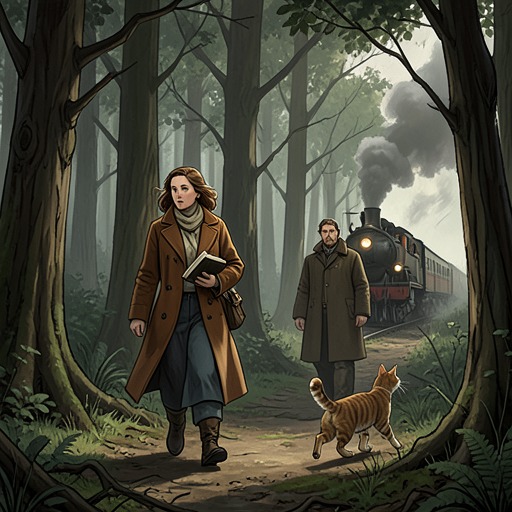
At dawn the next morning, Ove drives his Saab to Sonja’s school and builds the disabled ramp with his bare hands. The contrast with the preceding months is exact: where letters, complaints, and a lawsuit have failed to move the authorities, Ove acts directly on the staircase. The account does not describe the construction process or give measurements; its emphasis is on the decision to replace petitioning with work.
Afterward, Sonja comes home each evening and tells Ove about the pupils. Some arrive in classrooms accompanied by police, yet leave able to recite four-hundred-year-old poetry. They make her cry, laugh, and sing, and Ove likes them for what they do to Sonja, even though he cannot make head nor tail of them. The school ramp thus belongs to a wider pattern: Sonja fights for children she never had, and Ove fights for Sonja. His action does not undo the accident or settle his dispute with the state, but it makes care tangible at the place where her work continues.